The question of what season I am usually arrives after a quiz that felt wrong, or after three friends gave three different answers. Home testing can work, but only if you test in the right order: undertone first, depth and contrast second, draping last. By the end you will have a season that is a working hypothesis, not a guess.
Where people usually get stuck
The pattern I see: people start with a palette quiz that asks what colors they like, and of course they pick their favorites, not what their skin can actually carry. Or they photograph themselves in a bathroom lit by one warm bulb, and the photo says autumn while the mirror says summer.
Start with undertone, not with a palette
Another classic trap is the wrist-vein test taken alone. Blue veins can show up on warm skin, greenish veins can mislead on olive skin, and the lighting changes both readings. None of these tests are useless; they are just being read out of order. The temperature question has to be settled before the palette question can even make sense.
The third place people get stuck is the between answer. A test lands on soft autumn and adds a note that you are close to soft summer, and now there are two palettes in your head instead of one. That note is usually doing real work: it means your undertone is neutral enough to borrow from the neighbor, and the final word will come from depth and chroma, not from retaking the quiz.
Take a breath before testing: pull your hair back, take off makeup, and sit by a window in indirect daylight. Ten minutes of honest testing beats a week of scrolling through color season quizzes.
Undertone is the temperature underneath your skin: warm, cool, or neutral. It is the one trait everything else hangs on, so test it first. You can do it at home in under ten minutes with three checks, and the checks should mostly agree before you trust them.
| Check | How to do it | Cool tells | Warm tells |
|---|---|---|---|
| White paper | Hold plain white paper beside bare skin in daylight | Skin looks clear, slightly rosy | Skin looks yellow or sallow |
| Metal | Compare silver and gold near your face | Silver brightens, gold looks heavy | Gold warms, silver turns skin grey |
| Lipstick | Berry red on one side, brick-orange on the other | Berry lifts the face, orange adds shadows | Orange flatters, berry makes skin ashy |
If two checks say cool and one stays neutral, call yourself cool; the reverse makes you warm. If all three feel like a coin flip, you are probably neutral, which is normal and does not make testing harder. It just means your season will be a muted or soft type that handles both temperatures in small doses.
Small observation: check at the jaw, not the forehead. Forehead skin is often lighter, and freckles change the read.
Check contrast and depth next
Once temperature is settled, look at depth: how light or dark your hair, eyes, and skin read as a total. Then look at contrast: the gap between the darkest and lightest features. Black hair with fair skin is high contrast; honey blonde with light brown eyes and pale skin is low contrast.
Depth and contrast decide which version of your season you are. A cool-skinned person with pale skin and ashy blonde hair is heading toward light summer; the same cool undertone with dark brown hair and deep eyes points to deep summer or true winter territory. Chroma, how muted or bright your coloring is, fills in the last word: soft, true, or bright.
A quick check: look in a mirror in daylight, squint until the details blur, and ask what stands out first, the color of your skin or the shape of your features. If the coloring jumps out, depth and contrast are working for you; if the features dominate, your season is likely muted.
One more read: take a black-and-white photo of your face in daylight, no filter, and look at the grey values. If your hair and skin sit far apart on the grey scale, contrast is high; if they melt together, it is low. Depth is the easier half, because you can usually feel it: dark features ask for dark colors, while light features get swallowed by them.
A short draping test with clothes you own
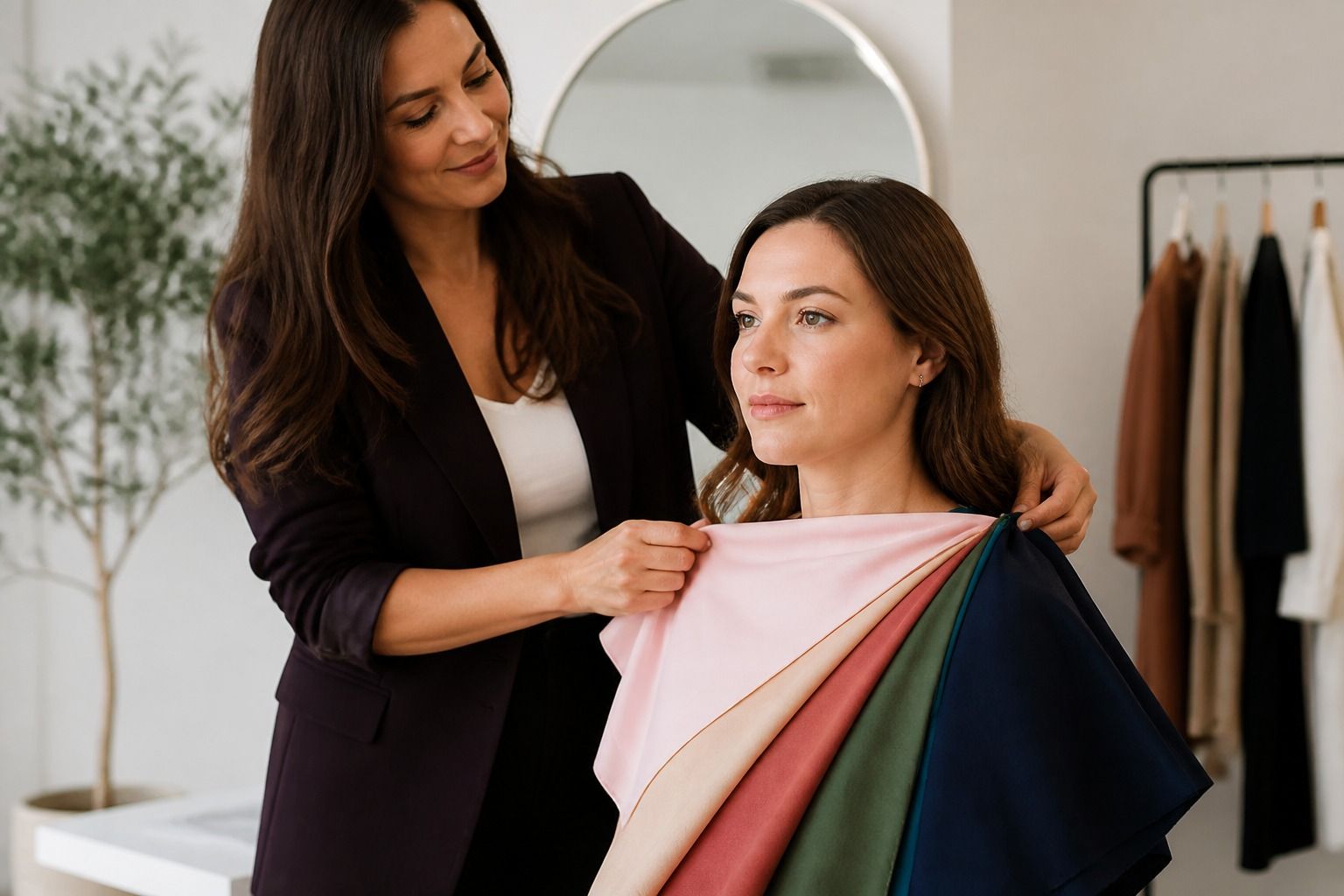
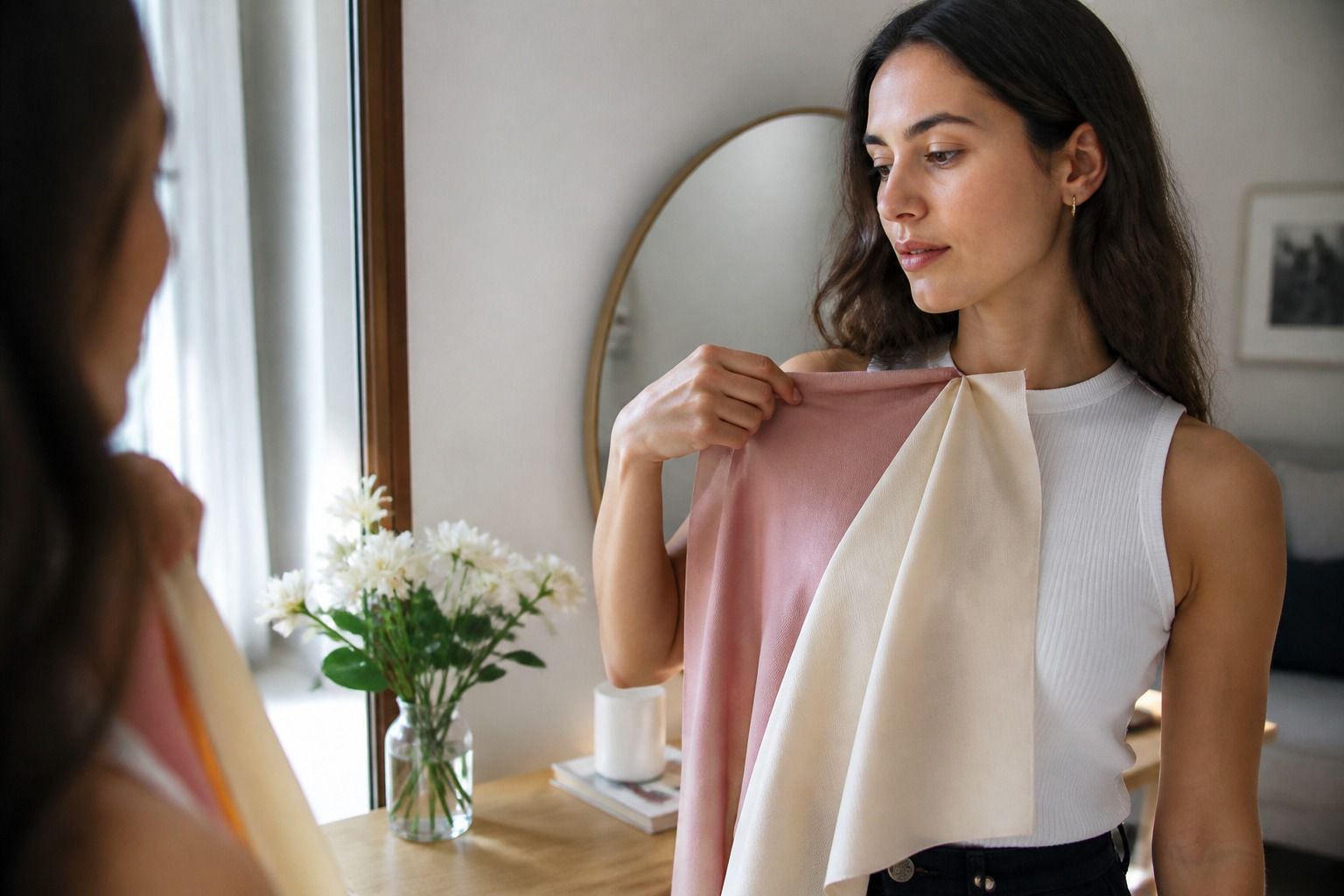
You do not need a professional drape set. Go through your closet and pull two versions of the same idea: pure white and warm cream, berry and rust, dusty blue and olive, charcoal and camel. Those pairs do most of the work.
Method matters more than fabric. Sit facing a window, hair back, no makeup, and hold one color under your chin at a time. Give each shade twenty or thirty seconds, then look at your skin, not at the color. Note whether shadows gather around your mouth, whether your skin takes on a grey or yellow cast, and whether the whole face looks more awake.
Do not test a full outfit at once. One color near the face is a clean experiment; a full look mixes too many variables, and that is where people conclude that everything looks bad and give up.
If one side of every pair wins, you have your answer: the winning temperature plus the depth you observed. If the pairs split evenly, your season is probably a soft or true type, and the tie-breaker is chroma rather than temperature.
When a photo quiz helps and when it misleads
Photo quizzes and online color season tests are not useless; they are just bad at measuring what the camera distorts. White balance makes warm rooms look yellow, phone cameras add contrast and saturation, and filters finish the job. I have seen the same photo read as autumn in one app and summer in another.
Use them the right way: take a seasonal color analysis quiz twice on different days, in daylight, with a bare face, and treat the result as vocabulary rather than a verdict. The quiz will at least teach you the words: deep, soft, bright, true. You need those words for the real test anyway.
Cross-check the quiz result against the draping test above. When both point in the same direction, you can act on the season with confidence; when they disagree, trust the fabric in daylight. The final judge is your mirror, not the score.
Last piece of advice: a season is a working hypothesis. Buy one piece in your result palette, wear it for a week, and see whether the compliments arrive. The color that makes you look rested wins, whatever the label says.
One honest note: a season is a starting point, not a personality trait. If a color from your neighbor season earns compliments week after week, keep it. The palette describes your best range, and your range can include a few outliers.