Almost everyone who books a color analysis with me has already taken a color season test online, usually with a phone photo and a five-minute quiz. Some of those tests are genuinely useful, and some are little more than a coin flip wearing nice design. This guide is about the difference: what a photo can actually show about your undertone and contrast, which setup mistakes silently corrupt the result, and when you should trust what the test told you.
Why photo tests are popular
The appeal is obvious. No appointment, no pile of draping cloths, no instruction to remove your makeup at ten in the morning; you upload a selfie and the test hands you a season and a palette. For someone who has never heard of seasonal color analysis, that instant label is the hook that leads them into a genuinely useful system. I would rather someone start with a rough quiz than never start at all.
What the photo can actually show
The problem is that many quizzes are built for engagement, not accuracy. They borrow a few well-known questions, run a photo through a filter, and return a confident answer with no way to audit the reasoning. The same person can get deep winter on one app and true summer on another, and both results feel equally authoritative. That is not a failure of the idea; it is a failure of the implementation.
So the honest framing matters: a color season test is a filter, not a verdict. Its job is to narrow the field from sixteen seasons to two or three candidates that deserve a closer look. If you treat it that way, even a mediocre quiz helps. If you treat the first result as gospel, you will spend real money on a palette that may belong to your camera roll instead of your skin.
Under good conditions, a photo can show two things reliably. The first is the direction of the undertone: whether you read cooler or warmer, as long as the lighting is neutral and the skin is bare. The second is contrast, the depth difference between hair, eyes, and skin, which the camera captures faithfully when everything is in the same frame. Those two readings already rule out a lot of seasons.
What a photo cannot show is just as important. Whether your coloring is muted or clear depends on subtle saturation that phone cameras routinely distort. The exact shades of your palette, the ones that will actually look good in daylight, cannot come from a selfie at all. Neutral undertones, the people who sit exactly between cool and warm, are where photo tests fail most often, because the camera has to pick a side and it picks based on light, not on you.
Here is the concrete version I explain to clients: the same person photographed in window light and in warm bathroom light can be typed as two different seasons by the same app. The camera does not lie, exactly, but it does interpret. What the photo shows reliably is the relationship between your features. What it cannot show is the absolute truth of your coloring, because absolute color truth does not survive white balance, saturation processing, and the color grading baked into every modern phone.
Setup mistakes that break the result
The single biggest mistake is lighting. Indirect window light, facing the window, is the only setting I trust. Direct sun creates hard shadows and blows out highlights. Overhead artificial light adds a yellow or green cast. Mixed lighting, half window and half lamp, turns your face into a patchwork that no quiz can read. If the room does not look neutral to your eye, the photo will not either.
Your face needs to be bare and consistent. No foundation, no tinted moisturizer, no sunscreen with a white cast, because all of it changes the undertone the camera records. Jewelry off, hair pulled back from the face so it does not frame and shade the skin. Dyed hair is the trap everyone forgets: if your hair has been colored for years, the photo records your hair, not the contrast your features actually have, and the test will silently type someone else.
Background and framing matter more than they seem. A colored wall, a warm wooden door, or a bright towel behind your head shifts how the camera meters the whole frame. Use a plain white or light gray wall, shoot at face level rather than from below, and turn off beauty modes, filters, and any portrait effect that smooths your skin. Take the photo in the same conditions twice, once in the morning and once in the afternoon; if the two versions disagree, the light was the variable, not your season.
Questions a test should ask beyond the photo
A good test does not stop at pixels. It asks whether your natural hair color is lighter, darker, or the same as your childhood color, because hair changes are the most common reason a season shifts. It asks about your eyes, your skin reaction to the sun, whether veins read blue or green, and which metal family you have always been told suits you. Each of these is a small vote that the photo does not get to cast.
It also asks about lived evidence: the colors people compliment you in, the lipstick shades that always work, the blouse that makes you look tired no matter how expensive it is. That kind of history spans years, while a photo spans one second. A quiz that only analyzes the image and never asks a single question about your life is telling you something about its own design, and it is not the season.
Before you trust any result, check what the quiz actually asked. Did it separate contrast from undertone? Does it allow an in-between, neutral answer, or does it force everyone into warm or cool? Does it explain the reasoning, or just print a result with a palette attached? A two-question quiz with a confident output has borrowed authority it did not earn, and the confidence should transfer to you only when the questions match the complexity of the thing they are measuring.
When to trust the result and when to repeat it
Trust a result when the evidence lines up. The same season appears across two or three tests that use different methods. The palette explains things you already know, the compliments you have always gotten, the colors you reach for without thinking. The photo was taken in clean window light with bare skin and no filter. When all of those agree, you are not being naive to believe the answer; you are being reasonable.
Repeat the test when anything conflicts. Two apps give different seasons. The lighting was wrong and you know it. You took the photo with makeup on, or your hair was freshly colored, or the background was bright red. You should also retest after real changes: a major hair color shift, a tan that actually changes your skin depth, or simply a few years passing, because contrast can soften as hair lightens and skin changes.
| Question | Good photo test | In-person draping |
|---|---|---|
| Direction of undertone | Rough, with neutral light | Confirmed with warm and cool drapes |
| Contrast level | Visible from the features | More precise |
| Muted vs clear | Often unreliable | Decisive, with matched fabrics |
| Exact palette shades | No | Yes, near the face in daylight |
| Season drift over years | No, one moment only | Can be reassessed anytime |
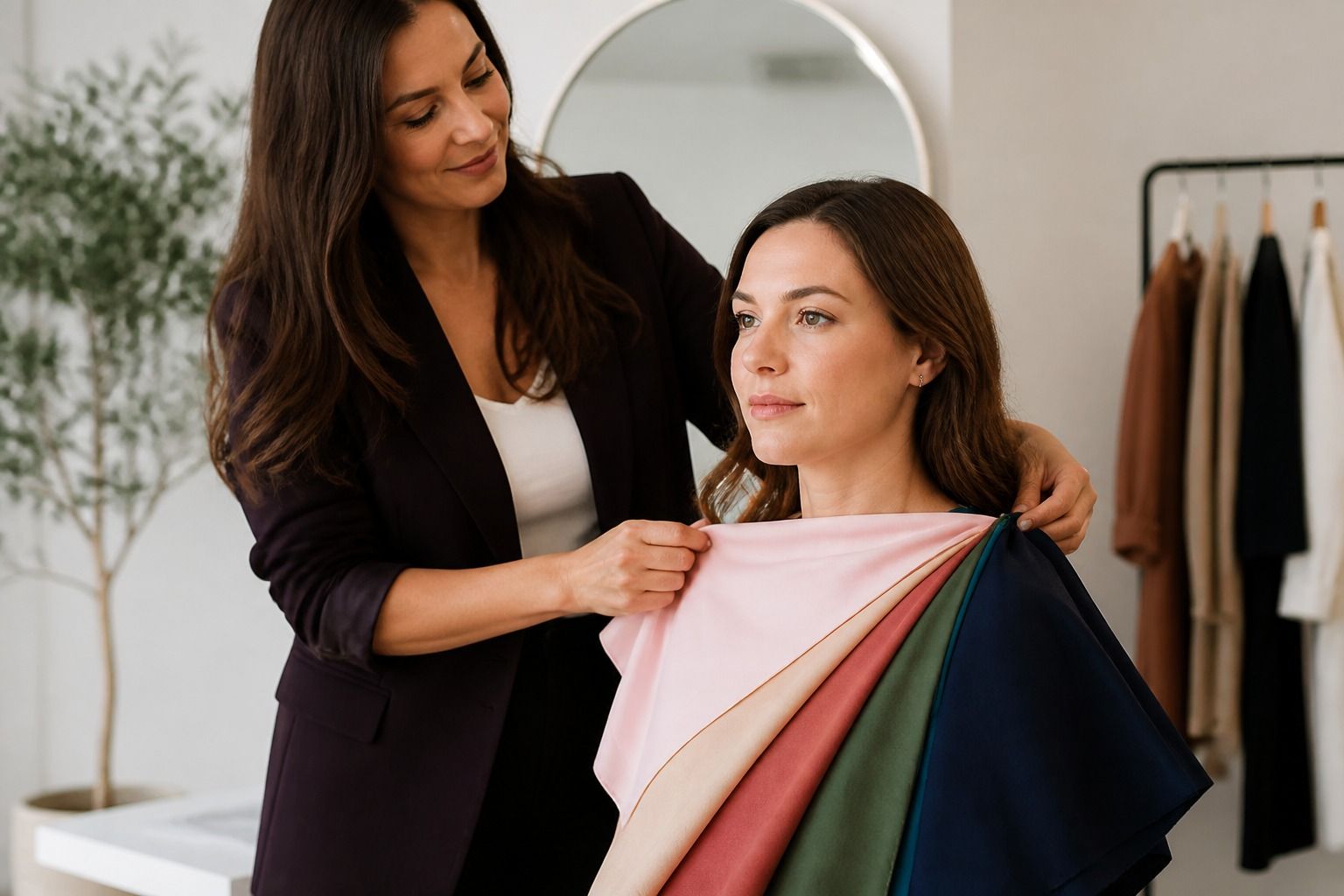
The most useful habit is to treat the quiz result as a hypothesis and then test it where it counts: in daylight, with real fabric held under your chin, with the opinions of people who see you every day. A color season test should start a conversation between you and your mirror, not end it. When the quiz and the fabric agree, you have your season. When they disagree, the fabric wins, and that is exactly how it should be.