Cool summer is the palette people discover late, usually after years of fighting with black and pure white. You know you are cool, because silver flatters you and gold leaves you looking sallow, but the winter palette feels like armor and the soft summer palette feels like fog. Cool summer is the middle path: blue-based, clearly cool, softly muted, with enough color to look polished in an office and enough softness to look human in daylight.
Where Cool Summer Sits in the Summer Family
The summer family is cool plus muted, and each member dials one knob differently. Light summer is the airiest, with pale colors and low contrast. Soft summer is the gravest, with muted tones that lean almost neutral. Deep summer adds depth, borrowing dark navy and charcoal from winter's edge. Cool summer sits in the middle: more saturated than soft summer, deeper than light summer, but still unmistakably soft compared to true winter.
The Blue-Based Colors That Actually Work
The classic way to identify it is the contrast test. Cool summers usually have medium contrast: ash blonde or cool medium brown hair, skin with a rosy or pink undertone, and eyes in blue, gray-blue, or soft hazel with cool flecks. When they wear black, they notice the face separates from the outfit; when they wear navy or charcoal, everything stays connected. That connected feeling is the summer signature.
The table below compares the three summer neighbors on the traits that matter for shopping, because most people who land on cool summer do so after trying on one of the other two:
| Trait | Cool summer | Light summer | Soft summer |
|---|---|---|---|
| Main quality | Cool and clear-soft | Pale and airy | Muted and grayed |
| Contrast | Medium | Low | Low to medium |
| Best neutrals | Navy, cool gray, rose beige | Powder gray, white | Taupe, gray-green |
| Risky shift | Too dark means winter | Too light means washed out | Too gray means nothing left |
Read the last row carefully; it is the one that predicts most failed outfits.
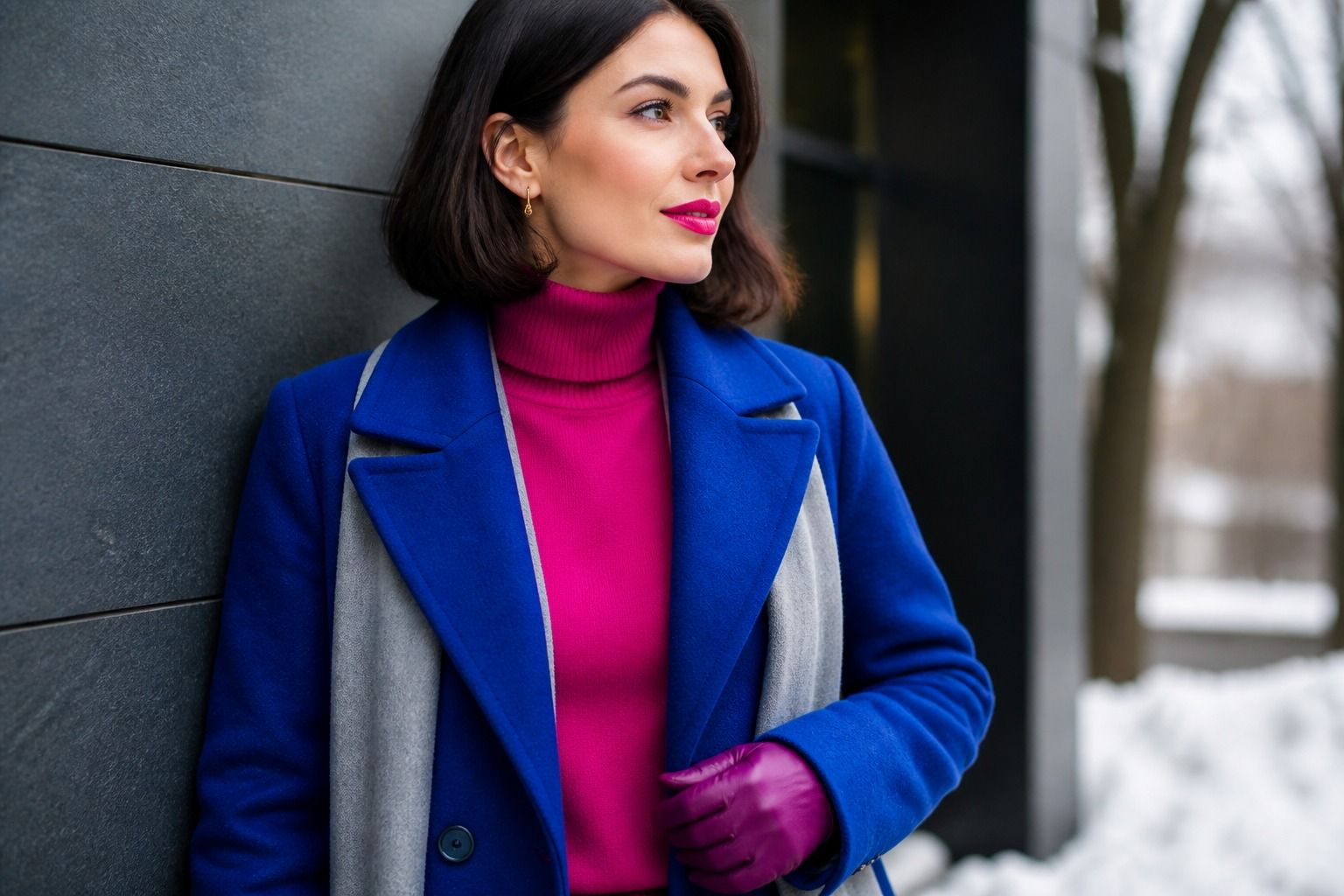
Cool summer colors all carry blue. Powder blue, periwinkle, rose, soft raspberry, lilac, cool gray-blue, and navy form the core, and each has a warmer twin that will quietly work against you. Rose beats coral; raspberry beats cherry; lilac beats lavender-mauve; powder blue beats turquoise. The pattern is always the same: when a color looks like it belongs to spring or autumn, it is not a cool summer color.
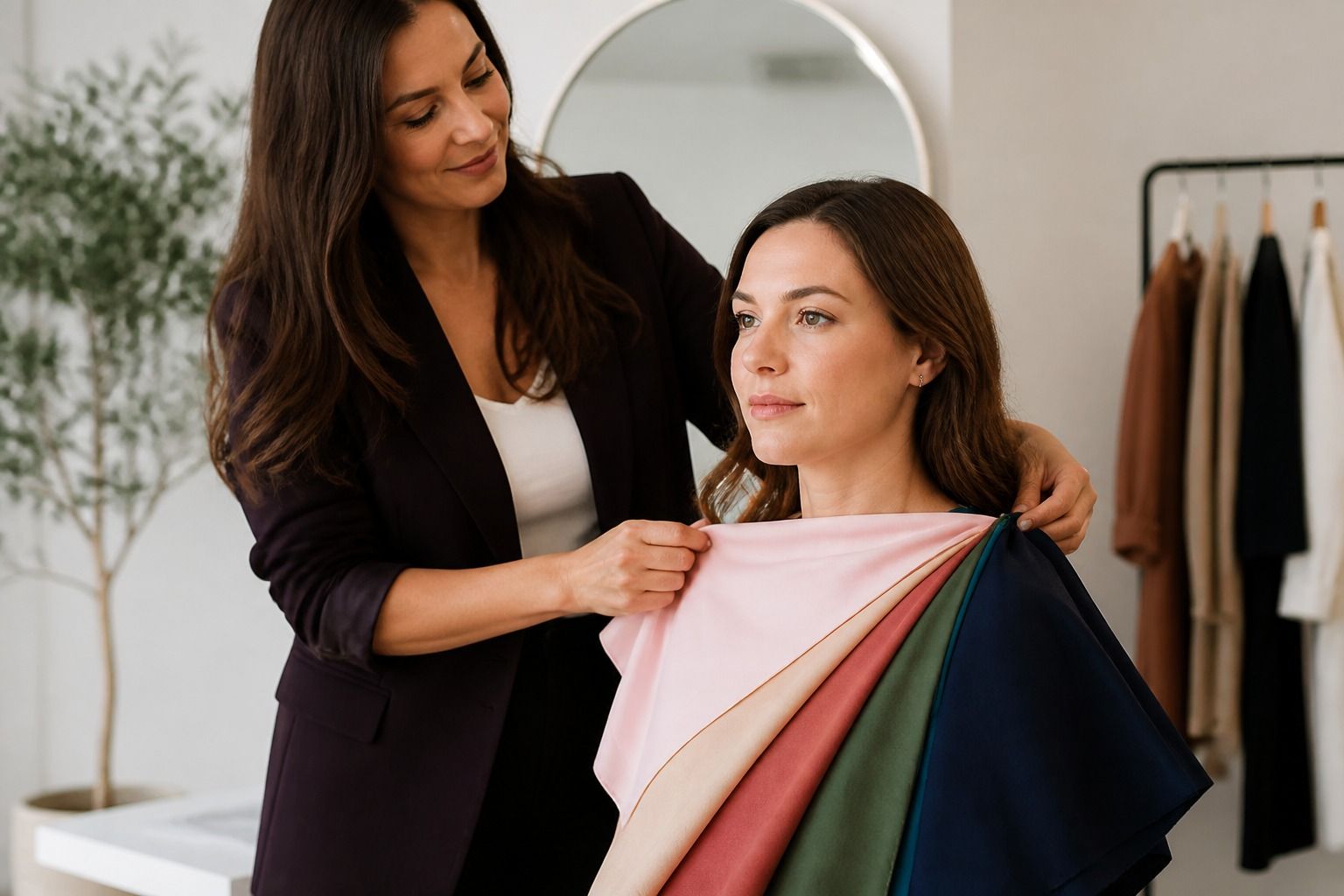
The easiest in-store test is the rose test. Hold a true rose, which is a blue-based pink, and a coral scarf together. If the rose makes your skin look even and the coral makes your jaw look yellowish or blotchy, the cool path is confirmed. Do the same with powder blue versus turquoise; cool summers see the difference immediately in the under-eye area.
There is a useful nuance about denim. Cool summers can wear blue jeans in a wide range, because denim is naturally blue-based, but the most flattering washes are gray-blue and medium blue rather than bright turquoise-adjacent stonewashed tones. The same rule applies to shirts: a blue oxford reads more like cool summer than the same shirt in green or khaki.
Cool Neutrals Without the Winter Weight
Cool summer neutrals are cool, soft, and never black. Cool gray, heather gray, navy, mushroom, cool taupe, and a soft white with a hint of blue do the heavy lifting. The most common mistake is replacing black with another heavy color; the goal is not darker, it is softer. Charcoal flatters more than black, and navy flatters more than charcoal, so a cool summer wardrobe can be built almost entirely around navy and gray with white and rose accents.
Pure white deserves special mention. Many cool summers wear white confidently for years before realizing that a soft white or ice white is what actually flatters them; pure white, like black, has a starkness that separates the face from the outfit. The test is simple: hold a crisp white sheet and a soft white knit side by side. The softer one will make the skin look calmer.
When building a capsule, think in pairs: navy trousers with a rose blouse, a gray knit over a powder blue shirt, a white tee under a lilac cardigan. Each pair gives the cool tone somewhere to sit, and the softness does the rest. If an outfit looks almost right but feels heavy, swap the dark neutral for the next-lighter one and watch the face change.
Makeup That Stays Soft and Cool
Cool summer makeup follows one principle: cool, soft, and never orange. Foundation should have a pink or rose undertone; a golden base will make cool skin look sallow by afternoon. Blush in rose, soft pink, or berry applied lightly reads fresh, while peach and terracotta blushes sit on the skin like a bruise. Lipstick is the biggest lever: rose, cool pink, soft raspberry, and muted mauve all work, while brick and orange-red lipsticks fight the entire palette.
There is a specific trick for lipstick testing. A cool summer lipstick should look slightly plummy against your hand; if it looks orange on anyone, it is warm. And because the palette is muted, sheer formulas often work better than full-coverage ones; a soft wash of color keeps the fresh look that matte, heavy lipsticks erase.
Eyeshadow should stay in the cool family: gray-rose, lilac, cool taupe, powder blue, and soft silver. Bronze and copper shadows, which flatter warm seasons, will make cool summer eyes look bruised rather than defined. Mascara in brown-black or charcoal is usually better than pure black, which can be the small detail that tips a soft look into a harsh one.
Hair Colors That Respect the Palette
Hair is the one place where a cool summer can dramatically shift how the palette reads, because the hair frames the face. The direction is always cool: ash blonde, cool mushroom brown, soft cool brown, or cool taupe tones. Warm hair colors, especially golden blonde and copper, pull the whole face toward autumn and make the blue-based wardrobe feel like it belongs to a different person.
The honest caveat is that results depend on your starting base, and dye jobs on previously colored hair can go brassy or greenish in ways that have nothing to do with the palette. If you are considering a change, the practical approach is to test the direction before committing: wear a cool gray or ash-toned scarf next to your face for a week and see whether the palette suddenly clicks. If it does, a cool-toned gloss or a subtle ash toner is a lower-risk first step than a full color change, and it is worth discussing with a colorist who knows your history.
If you are not ready to dye at all, the palette still works from the neckline down. A cool gray knit, a navy jacket, or a rose scarf worn close to the face does the same framing work as cool hair, which is why cool summer is one of the easier palettes to live with during a transition. Natural gray hair is a genuine advantage here: it sits inside the cool summer palette naturally, and the same soft cool wardrobe that flatters you now will keep working as the silver spreads.