Most people begin seasonal color analysis the way I did years ago: stand in front of a mirror, check the veins under a bathroom bulb, hold gold next to silver, and end up more confused than when they started. The tests themselves are fine. They usually fail because of timing, lighting, or a small detail like makeup residue. This guide covers the undertone tests that actually produce useful answers, explains why they sometimes disagree, and shows how to turn a provisional reading into a real starting point for finding your color season.
Undertone vs skin shade: why the difference matters
Skin shade is how light or dark your skin is: fair, medium, tan, deep. Undertone is the warmth or coolness underneath that shade, and the two are independent. A very fair person can have a warm undertone that looks better in cream than in stark white, while a deep-skinned person can be clearly cool and glow in cobalt instead of caramel. Foundation matching trained most of us to shop by shade alone, which is why so many bases sit slightly off even at the right depth: the warmth is wrong.
The vein check and its limits
Do this check before seasons for a simple reason: every later decision inherits the mistake. If you file yourself as warm by accident, you will spend months testing spring and autumn palettes and wondering why everything feels heavy or slightly yellow. A proper skin undertone test is the cheapest filter in the whole system. Run correctly, it takes ten minutes and saves weeks of misdirection.
The easiest mistake is judging warmth from a phone photo. Cameras white-balance away the very signal you are hunting, and a face lit by a ring light looks pink in one shot and golden in the next. If you must use a photo, take it in the same daylight you would test in, with no filter, and compare two frames taken minutes apart rather than trusting a single one.
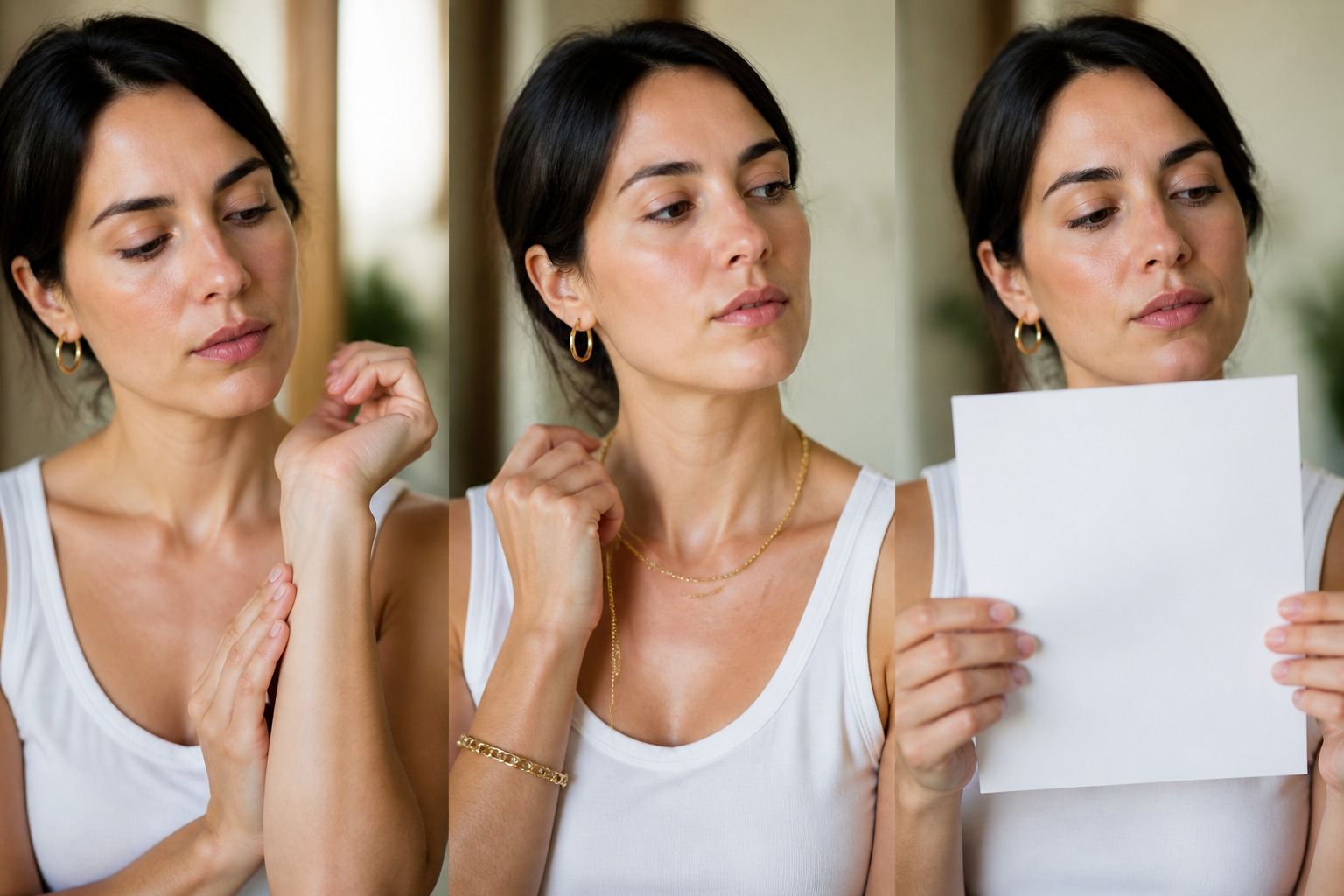
The classic version is quick. Look at the veins on the inside of your wrist: blue or purple points cool, greenish points warm, a mix usually suggests neutral. The catch is that this only works in honest light. Yellow bathroom bulbs add warmth to everything and turn blue veins greenish; direct sun does something similar. Do the check in daylight, preferably near a window that does not face the sun, with your sleeve pushed past the elbow so you can compare several spots along the inner arm instead of one small area.
Olive skin breaks the rule in a specific way: it can show greenish veins while the undertone stays cool, because the green sits on the surface while the temperature stays underneath. Deeper or heavily tanned skin can make veins nearly invisible, so the test loses reliability no matter the light. Treat a single vein reading as a hint, not a verdict. When your wrist, inner elbow, and forearm all tell the same story, that story starts to mean something. Blue veins undertone combined with two other cool signals is a solid early read; one blue vein on its own is not.
Jewelry and white paper tests
The gold or silver test is really about conditions. Stand in daylight, remove every other piece of jewelry, and pin your hair back so it does not tint your face. Hold the gold for a few seconds, switch to silver, then judge from a step back. If silver clears your skin and gold adds an unflattering yellow, you are reading cool. If gold warms you and silver makes you look ashy, you are warm. Most people settle the question in the first few seconds when the setup is right; prolonged hesitation usually means neutral or olive undertone, which is information on its own.
The white paper test gives a second opinion. Take a plain sheet of white paper, no makeup, and hold it under your chin. Look for the cast it throws onto the skin: pinkish, golden, or gray. Pink reads cool, yellow reads warm, and gray usually points to olive or a muted neutral. Both tests share one trap: a freshly washed face is flushed, and a recent self-tan or tinted moisturizer overrides everything. Run them on a bare, rested face, and if two tests agree, you have your answer.
Run both checks twice across a few days. Skin changes with sleep, weather, and whatever you washed your face with, and a single session can be thrown off by a mild flush you did not notice. When the results match on two separate mornings, you can stop second-guessing the first one. When they keep flip-flopping, that is your neutral or olive signal showing up again, and it deserves a draping session rather than more mirrors.
Where neutral and olive undertones complicate things
A neutral undertone means neither metal clearly wins, veins come out mixed, and the usual labels feel like they do not fit. That is not a failed test. Neutral-leaning skin usually lands in a muted season like soft summer or soft autumn, where the palette does the clarifying work instead of the temperature label.
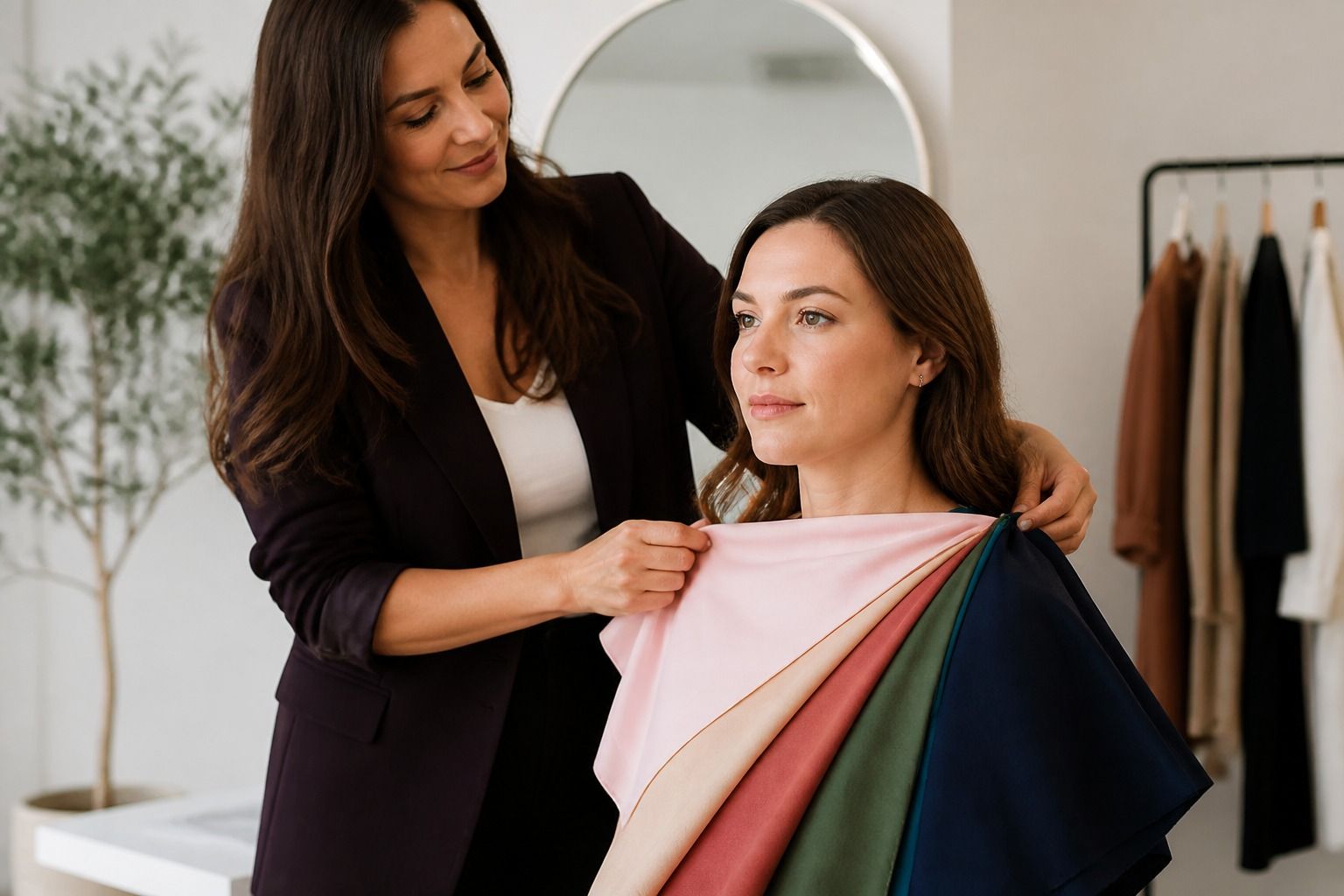
Olive adds a greenish tone over either a warm or cool base, which is exactly why single-signal tests confuse it: the green masks the temperature underneath. If olive applies to you, skip single-test conclusions and go straight to fabric draping later in the process. No test in this guide is definitive on its own. They are converging evidence, and they work best in pairs. When gold and white paper disagree, run the set again under better conditions before you change anything else about your routine.
Using the result to narrow your seasons
A cool reading puts you in the summer or winter family. A warm one points to spring or autumn. Neutral leaves both doors open and sends you to contrast and depth next, which is where the 16-season system actually earns its keep. Write the results down before you forget: memory smooths over the moment silver clearly won, and an hour later you will be arguing for gold again.
The undertone test is the first filter, not the verdict. Bring your notes to a full analysis or a draping session, including where the tests conflicted. A colorist can work with 'silver won but white paper looked gray', because that is a real olive or neutral signal worth checking. Arriving with no reading at all forces them to start from zero; arriving with a tested one starts the conversation two steps ahead. And if you walk away with nothing but the discipline to test in daylight, you have already improved every color decision that comes next.
| Test | What you look for | Best conditions | When it misleads |
|---|---|---|---|
| Vein check | Blue veins cool, greenish veins warm, mixed neutral | Daylight, inner arm, several spots | Olive skin, deep skin, yellow lighting |
| Gold or silver | Silver clears cool skin, gold warms warm skin | Bare skin, natural light, no other jewelry | Recent self-tan, blush, tinted moisturizer |
| White paper | Pink cast cool, yellow warm, gray olive or neutral | No makeup, rested face, plain paper | Freshly washed flushed skin |