Soft summer and soft autumn are the most frequently confused pair in the 16-season system, and I understand why. Both palettes are muted, both sit at medium depth, and both flatter people whose coloring is low in contrast, so the same dusty fabric can look passable on either type. The difference hides in temperature, and temperature is exactly what gets lost in phone photos and bad lighting. This guide walks through how I separate the two in consultations, what you can check at home, and what to do when the answer is genuinely close.
Why these two seasons confuse people
The confusion starts with the shared word "soft." In seasonal color analysis, softness means colors are grayed, desaturated, and blended, and both seasons share that quality completely. The second source of confusion is the modern makeup and fashion landscape, which favors exactly this zone: muted rose, oat, taupe, and dusty green are everywhere, and many brands market the same garment as suitable for every skin tone.
The undertone difference in plain terms
So the average client arrives with two strong pieces of evidence. First, saturated colors feel like noise on her. Bright fuchsia or burnt orange each seem to wear her rather than the other way around. Second, she genuinely cannot tell whether gold or silver suits her better, because both look acceptable, which points to a neutral undertone sitting right on the fence. That combination, muted plus neutral, is the textbook setup for the soft summer vs soft autumn debate.
The practical consequence is that most people pick one by guesswork and then build a wardrobe around a label. I have watched clients make the wrong choice for years on the strength of a single photo. If you are here, slow down: the goal is not to name yourself, it is to learn which side of the temperature line your skin actually lives on.
Put most simply, soft summer is cool with a gray veil and soft autumn is warm with a brown veil. Both are muted, but soft summer colors carry a blue or gray influence, while soft autumn colors carry a yellow, gold, or olive influence. On the skin, this shows up as a faint rosy or ashy cast in the summer type and a faint peachy or golden cast in the autumn type, usually visible at the inner wrist and around the jawline in natural light.
Hair is a good second signal, though it is rarely decisive alone. Soft summers often have ash brown, cool taupe, or gray-streaked blonde hair; soft autumns tend toward warm brown, chestnut, or honey-toned blonde. The catch is that hair color changes, and most adults in their thirties or older have some dye or gray in the mix. Gray hair itself is neutral, so do not let it override everything else. I check the skin and eyes first, then treat the hair as supporting evidence.
Eyes follow the same temperature logic. Soft summer eyes are usually gray-blue, muted green, or cool hazel; soft autumn eyes lean warm hazel, amber-flecked brown, or olive green. The flecks matter more than the base color. Warm gold flecks around the pupil, visible in daylight, are one of the strongest soft autumn signals I know. Cool gray or blue rings around the iris are the summer equivalent.
One warning: online quizzes will not settle this. They over-weight hair color and personal preference, and they cannot see the subtle temperature of your skin. The checks below take about ten minutes with a mirror and decent light, and they will tell you more than any algorithm.
Reading the same color on both palettes
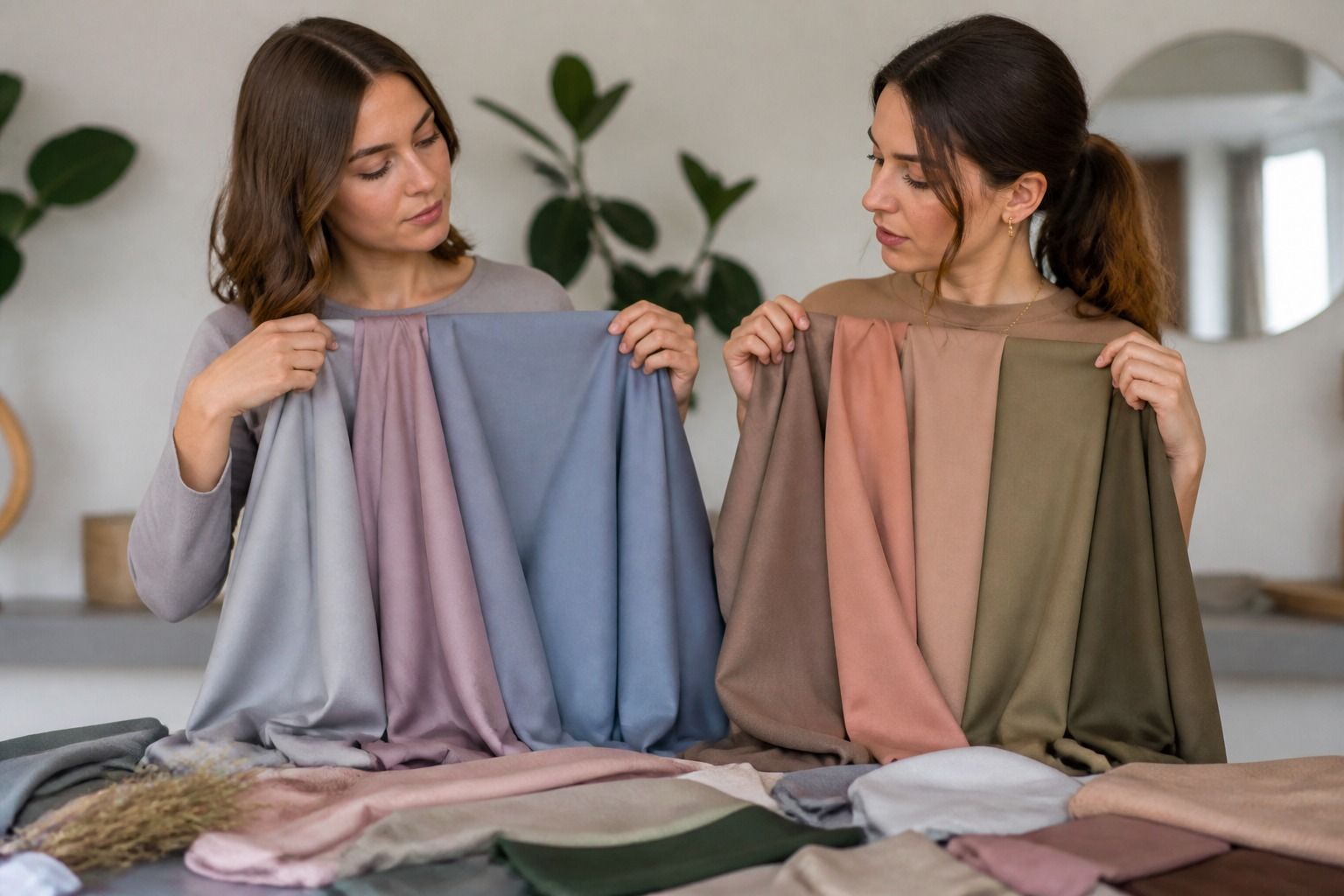
The fastest way to see the difference is to take one color family and read it on both palettes. Take taupe, for example. A soft autumn taupe is a warm greige with a trace of camel; a soft summer taupe is a cool greige with a trace of rose or blue. They look nearly identical in a photo and completely different against your skin. If the warm taupe makes your complexion look clearer and the cool taupe makes you look sallow, you are leaning soft autumn. If the cool taupe smooths your skin tone and the warm taupe adds a yellowish film, you are leaning soft summer.
Dusty pink is the other classic test. On a soft summer, dusty pink with a blue undertone is a signature color that brightens the eyes; on a soft autumn, the same pink can look like it is floating on the skin. The autumn-friendly version is a rosy beige or a dusty rose with a warm undertone. I use these two tests together because a single color can mislead: fabric texture, lighting, and even your phone screen all distort temperature.
Olive does the reverse work. A muted olive with a gold undertone is a soft autumn staple, especially in outerwear and cargo pieces. The same olive against a soft summer can drag the face down, and the cooler substitute is a grayed sage or a eucalyptus green. If you have ever owned a green jacket you love and a green jacket that makes you look ill, check the temperature of both greens; the pattern will probably match the split above.
The table below summarizes how the same color families shift between the two palettes. Use it as a shopping reference, not a set of rules.
| Color family | Soft summer | Soft autumn |
|---|---|---|
| Beige | Cool greige, stone, taupe with a gray cast | Rosy beige, camel, oat with a golden cast |
| Pink | Dusty pink, muted mauve, ash rose | Rosy beige, peach-rose, warm dusty rose |
| Brown | Mushroom, cool taupe, grayed cocoa | Warm taupe, caramel, chestnut |
| Green | Sage, eucalyptus, grayed teal | Muted olive, khaki, moss |
| Gray | Warm gray with a cool cast, blue-gray | Warm gray with a beige cast, greige |
| White | Off-white, cool ivory, soft silver-white | Warm cream, ivory with a yellow cast |
Quick draping checks at home
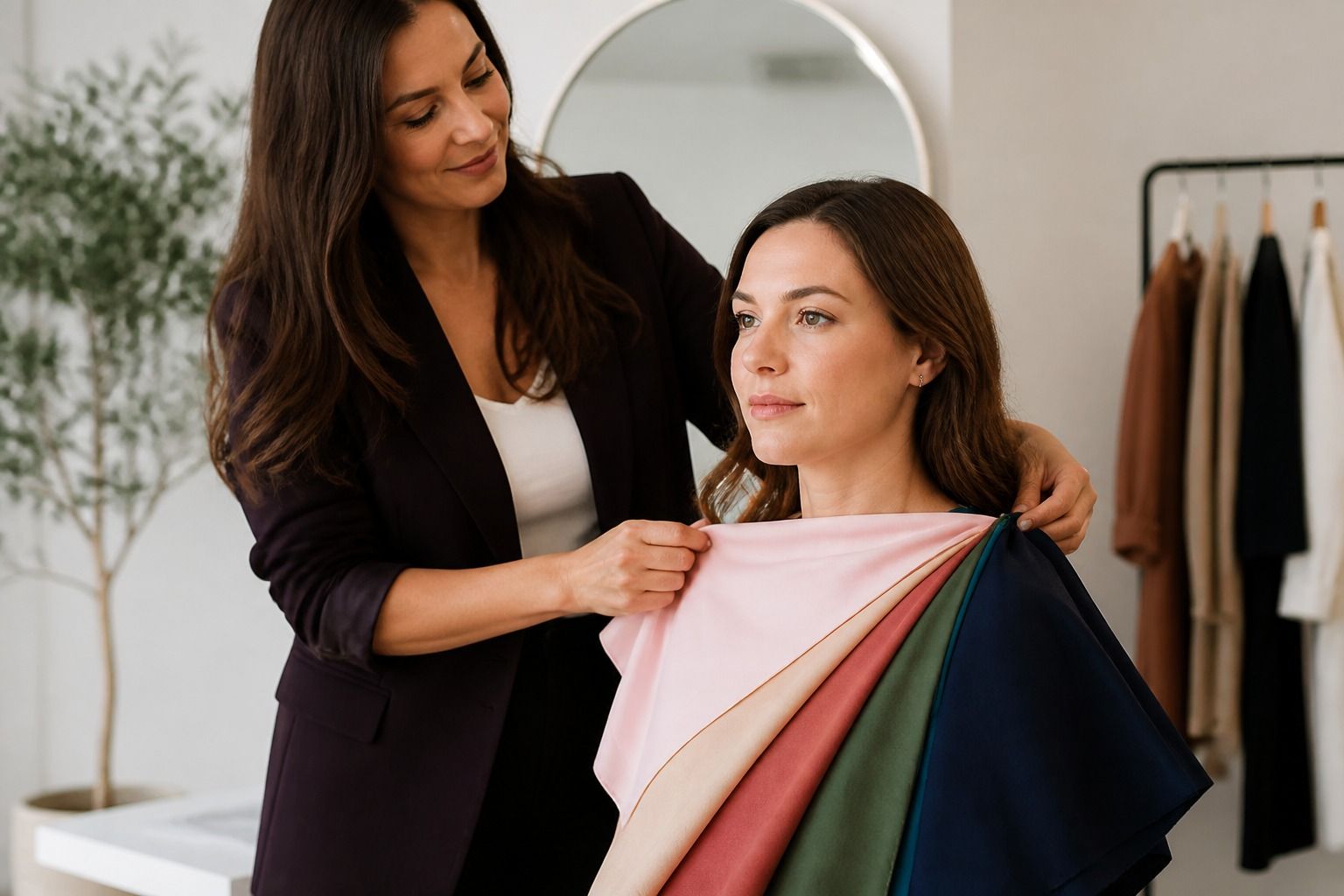
You do not need a professional drape set to get useful data. Pull two sets of fabrics from your closet: one cool-and-grayed (a dusty blue shirt, a gray scarf, a muted mauve top) and one warm-and-muted (a camel sweater, an olive jacket, a rosy beige top). Stand in front of a window with daylight, not overhead lighting, and hold each piece under your chin one at a time.
Look for three things. First, shadows: does the fabric put a gray shadow or a warm shadow on your face? Second, skin clarity: does your skin look smoother, or does the area around your nose and mouth look dirtier? Third, the eyes: do they look brighter in the cool set or the warm set? Take a photo with the cool set and one with the warm set using the same pose and lighting, then compare them side by side. Do not judge in the moment; the photos are usually more honest.
A common trap: jewelry. Many clients test with silver and gold and conclude they are neutral because both look fine. That is normal for both soft seasons. Small jewelry pieces rarely carry enough surface area to decide a muted season. If you want a metal test, hold a large silver scarf near your face and a large gold scarf, and watch the skin, not the metal itself.
One more check worth running: lipstick. A muted rose with a blue undertone and a muted rose with a warm undertone, applied one at a time, will usually split you cleanly. The version that makes your teeth look whiter and your lips look natural is your side. I have seen this test resolve cases where draping stayed ambiguous.
Building one capsule when the answer is close
Sometimes, even after all the checks, the answer stays close, and that is a legitimate outcome. Neutral undertones exist on a spectrum, and some people sit so precisely between soft summer and soft autumn that the two palettes overlap for them by seventy percent. If you are in that group, do not force a label. Build a capsule wardrobe from the overlapping zone, and you will spend far less energy second-guessing.
The overlap zone includes the muted colors that work for both: soft taupes, warm grays, dusty rose with a neutral undertone, muted teal, and grayed green that sits between sage and olive. A soft summer capsule wardrobe built on these pieces will not clash with a soft autumn's coloring, and vice versa. The pieces to avoid are the extremes at the edges: the ash-blue cool side and the caramel-camel warm side. Keep those for accessories until your preference becomes clear.
For makeup, the same logic applies. Neutral makeup in the shared zone means a foundation with a true neutral undertone, blush in a dusty rose that is neither blue nor peach, and lipstick in a muted rosewood. Then you can experiment with one edge at a time: a cool mauve lipstick one month, a warm terracotta the next, and observe which one gets you more compliments in natural light.
A final practical note about the "soft summer celebrities" question, because it comes up constantly. I avoid using celebrity examples as proof of a season. Red-carpet lighting, hair dye, and professional makeup all distort the signal, and the same actress can be typed as four different seasons by four different analysts. If you find a celebrity whose palette resembles yours, treat her as a source of outfit ideas, not as evidence about your own undertone. Your mirror and ten minutes of draping are the only authority that matters here.